
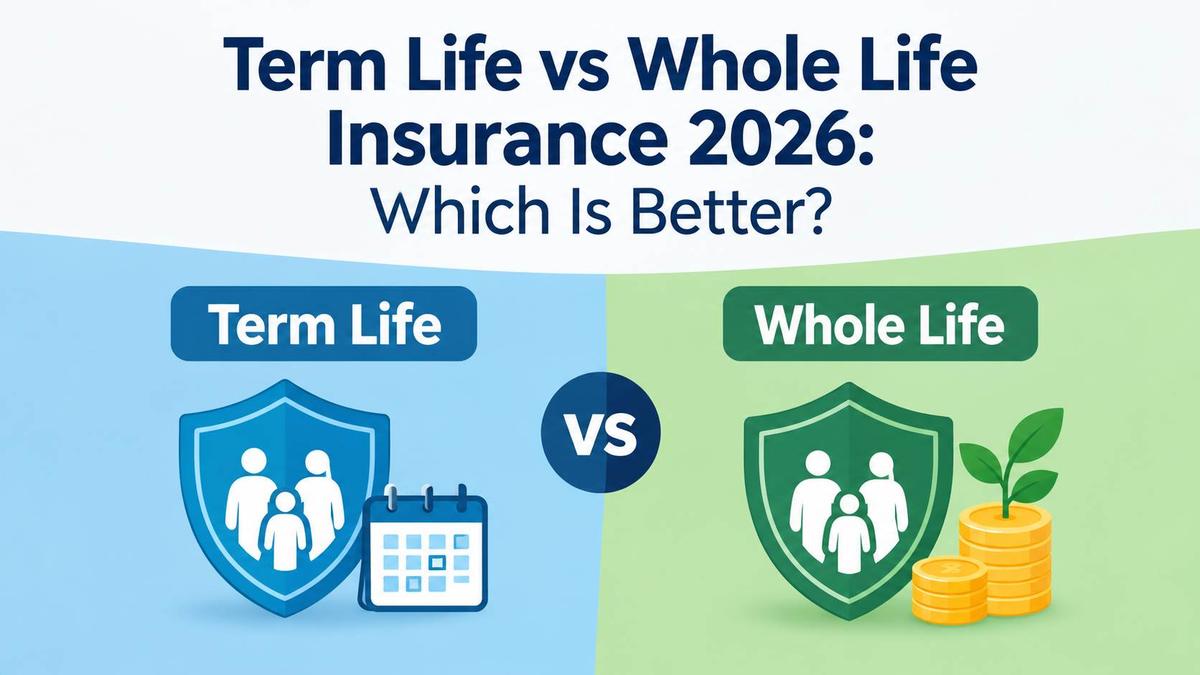
For most people, term life is the smarter choice — it costs roughly 10 to 15 times less than whole life for the same coverage, and it protects your family during the years they actually depend on your income. Whole life only makes sense if you genuinely need lifelong coverage or want it as an estate-planning and savings tool, and can comfortably afford the much higher premium.
Monthly cost compared
| Age (non-smoker) | Term / mo | Whole life / mo |
|---|---|---|
| 30 | ~$30 | ~$400 |
| 35 | ~$37 | ~$500 |
| 40 | ~$50 | ~$635 |
| 50 | ~$100 | ~$1,100 |
Averages for $500,000 coverage, 20-year term (source: MoneyGeek, 2026). Whole life typically costs 10–15x more than term. Varies by age, health and coverage.
The key differences
How long it lasts: term covers a set period (usually 10–30 years); whole life covers your entire life. Cash value: term builds none; whole life slowly builds cash value you can borrow against. Cost: term is cheap; whole life can cost 10–15x more for the same death benefit. Payout: both pay out tax-free — term only if you die within the term, whole life whenever you die.
The “buy term and invest the difference” math
This is the part that settles it for most people, so let’s actually do it. A 35-year-old pays about $37/month for $500k term or about $500/month for whole life — a difference of roughly $463 a month. Put that $463 into a plain index fund averaging around 7% a year for 20 years, and you’d end up with roughly $240,000. Your family is protected either way during those years — but with term + investing, you also walk away with a six-figure pot. That’s why the slogan sticks: for most families, term plus investing simply wins.
A real example
Picture a young couple with a new baby and a mortgage, stretched a little thin. A salesperson pitches them whole life at $500/month “because it builds value.” That one policy would eat their entire monthly breathing room. Swap it for $37/month of term and they’re just as protected for the next 20 years — and the $460 they save can go toward the mortgage, a retirement account, or the baby’s future. Protection first, investing second, and don’t let the two get tangled into one expensive product.
Who should choose each one
Choose term if…
- You want the most coverage for the lowest price
- You’re protecting specific years (a mortgage, kids growing up)
- You’d rather invest the savings yourself
Choose whole life if…
- You need coverage that lasts your entire life
- You’ve maxed out retirement accounts and want more tax-deferred savings
- You can comfortably afford the much higher premium for life
The bottom line
For the vast majority of people, term life wins — it protects your family for a fraction of the cost. Whole life is a specialist tool: great if you truly need lifelong coverage or estate planning, overkill and expensive if you don’t. Work out how long you actually need coverage, and let that decide. See our best term life and best whole life picks.
I’ll be blunt: for most people, I’d buy term and invest the difference. The gap is enormous — a 35-year-old might pay around $37 a month for term versus roughly $500 for whole life, and over 20 years that difference runs into six figures. Put even part of it into an index fund and you’ll usually come out ahead, with your family still protected during the years that matter most.
Whole life isn’t a scam — it’s genuinely useful for lifelong needs or estate planning — but if someone’s pushing it on a young family that’s stretched thin, that’s my cue to slow down and ask why. Buy the coverage you need, keep it cheap, and invest the rest.
FAQs
Is term or whole life insurance better?
Why is whole life so much more expensive?
What does “buy term and invest the difference” mean?
Can I convert term to whole life later?
Does whole life really build usable cash value?
Who actually benefits most from whole life?
Sources: MoneyGeek (2026 term and whole life cost estimates).