
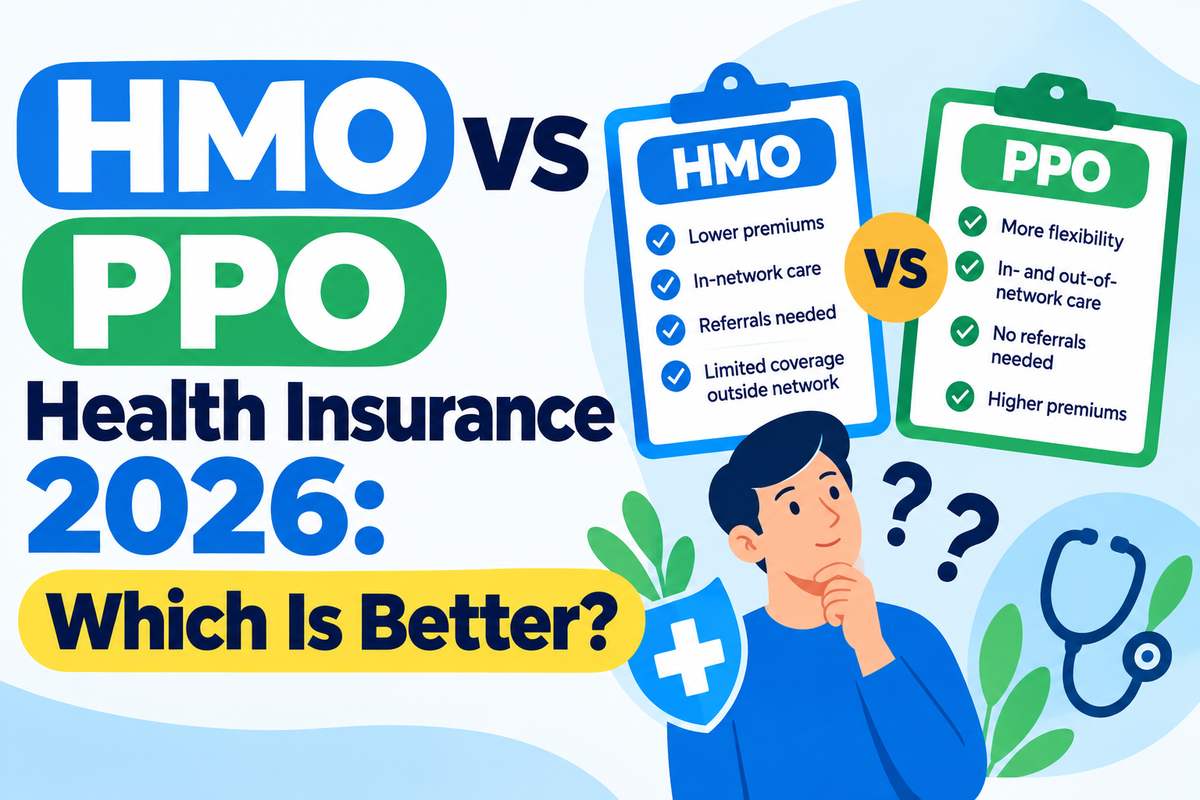
An HMO is cheaper (around $461/month on average) but more restrictive — you pick a primary care doctor, need referrals for specialists, and stay in-network. A PPO costs more (around $502/month) but lets you see almost any doctor, skip referrals, and go out-of-network. Healthy and want to save? Choose HMO. Want flexibility and specific doctors? Choose PPO.
Side by side
| HMO | PPO | |
|---|---|---|
| Avg premium / month | ~$461 | ~$502 |
| Primary care doctor | Required | Not required |
| Referral for specialists | Yes | No |
| Out-of-network care | Emergencies only | Covered (costs more) |
| Deductible | Low or none | Usually higher |
National average for a single 40-year-old (source: ValuePenguin, 2026). Your premium varies by state, age and plan.
Which is cheaper?
The HMO — about $41 less per month, or roughly $490 a year, plus it usually comes with lower (or no) deductibles and copays. You pay for that saving with less freedom: a required primary care doctor, referrals, and in-network-only care. The PPO costs more precisely because it removes those limits.
Don’t forget EPO and POS
HMO and PPO get all the attention, but two other plan types sit right between them and are often the smart middle ground:
| Plan | Referral needed? | Out-of-network? | Think of it as… |
|---|---|---|---|
| EPO | No | No (except emergencies) | PPO freedom to pick specialists, HMO-style network limits |
| POS | Yes | Yes (costs more) | HMO with a PPO escape hatch |
An EPO can be a sweet spot if you want to skip referrals but don’t need out-of-network coverage. A POS suits people who like a primary-care “quarterback” but want the option to go outside the network occasionally.
Look past the label — 4 numbers that matter
The HMO/PPO label is a starting point, not the whole story. Two HMOs can be very different plans. Before you choose, compare the monthly premium, the deductible, the out-of-pocket maximum (your worst-case year), and whether your doctors and prescriptions are covered. A PPO with your doctor in-network can easily beat an HMO that forces you to switch — the plan type only matters once those numbers line up.
Who should choose each one
Choose an HMO if…
- You want the lowest premium and are fine staying in-network
- You’re generally healthy and mostly need routine care
- You don’t mind a primary care doctor for referrals
Choose a PPO if…
- You want specialists without referrals, or specific doctors
- You travel often or want out-of-network coverage
- You have ongoing needs and value flexibility
A note on where you live
Availability isn’t the same everywhere. In many states the ACA marketplace has shifted heavily toward HMO and EPO plans, and true PPOs have become harder to find (and pricier) in some regions. So if flexibility matters to you, check what’s actually sold in your area before you set your heart on a PPO — the choice on paper isn’t always the choice on your exchange.
Real examples
If you’re 30, healthy, and just need a yearly check-up: the HMO is the easy call. You pocket around $500 a year, and the referral rule barely affects you if you rarely see specialists.
If you see a specialist regularly for an ongoing condition: a PPO (or at least an EPO) usually wins. Skipping referrals and keeping your specialist is worth the higher premium when you’re in that office often.
If you split time between two states or travel for work: a PPO’s out-of-network coverage is the feature you’re actually paying for — an HMO can leave you stuck when you’re away from home.
The bottom line
Pick based on how you actually use healthcare. If you rarely see doctors and want to save, the HMO is the smart, cheaper choice. If you see specialists often or refuse to switch doctors, the PPO’s flexibility is worth the extra cost. Either way, check your doctors are in-network before you sign up.
Honestly, I’d decide this with one question: is there a doctor or specialist you refuse to give up, or do you have a condition that means a lot of specialist visits? If yes, pay up for the PPO — the freedom is genuinely worth it. If you’re young-ish, healthy, and mostly need a yearly check-up and the odd prescription, the HMO is the easy call; you pocket around $500 a year and barely feel the restrictions.
The truth is, most healthy people overpay for “flexibility” they never actually use. And don’t overlook an EPO — it’s often the quiet best-of-both for people who hate referrals but don’t need out-of-network care. Match the plan to how often you really sit in a doctor’s office, not to the one that sounds fancier.
FAQs
Is an HMO or PPO cheaper?
What’s the main difference?
Can I see a specialist without a referral?
What are EPO and POS plans?
What if my doctor leaves the network?
Which should I choose if I’m healthy?
Sources: ValuePenguin (2026 HMO and PPO average premiums); HealthCare.gov (plan types); KFF.